Can bodybuilding methods help improve athletic performance?
Well, that ALL depends on HOW you use bodybuilding and IF the athlete needs bodybuilding methods. When I use the word “bodybuilding”, I am merely talking about the method of packing on muscle. Don’t be confused….. so, let me explain.
And, a critical note to determine IF the athlete should use some bodybuilding methods for packing on muscle is described in this short, 57 second video:
Hold on to your thoughts there with what Louie Simmons just said regarding NOT adding muscle mass because I am NOT talking about world class athletes in this article although what he JUST said is what we are careful with during the in season for our wrestlers, allowing them to maintain weight, rather than gaining weight / muscle mass in season and STILL becoming stronger and more explosive in season.
What is NOT “Athletic Bodybuilding”?
I was recently at a “hardcore” gym and there were bodybuilders there…. sort of…. kind of…. NOT the kind of hardcore I was once upon a time used to at Diamond Gym. I think “hardcore” has lost it’s “Hardness” through the years. So maybe this was soft core….. or something…..
These “bodybuilders” were sitting on machines, performing 1 arm cable exercises out the ass and ALL while wearing gloves, cut off short, short jeans and a weightlifting belt. That is NOT the bodybuilding I wanna see. It will NOT carry over to the athletic field.
TWO things to do when using bodybuilding methods for athletes is:
1) Choose the right exercises
2) Choose the right set – rep patterns to stimulate muscle growth
As mentioned above, You can use bodybuilding for athletic performance by choosing the right exercises, sometimes referred to as functional exercises.
Movement such as squats, deads, presses of all types and bodyweight exercises as well. The way to pack on muscle will be via manipulating the sets, reps, speed of the exercise and the overall volume of work.
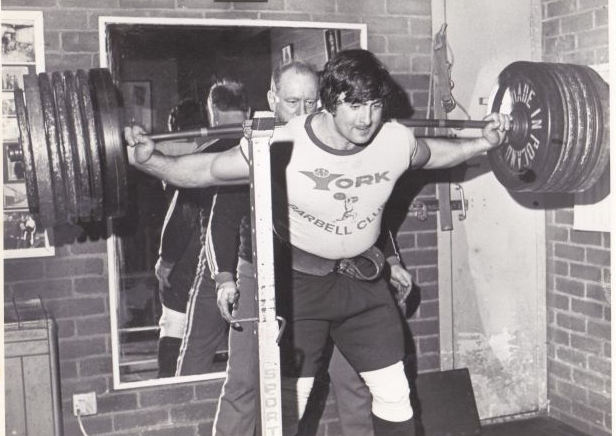
The powerlifters from Westside Barbell, known as the strongest gym in the world, perform 2 types of workouts:
- Max Effort, for the development of strength
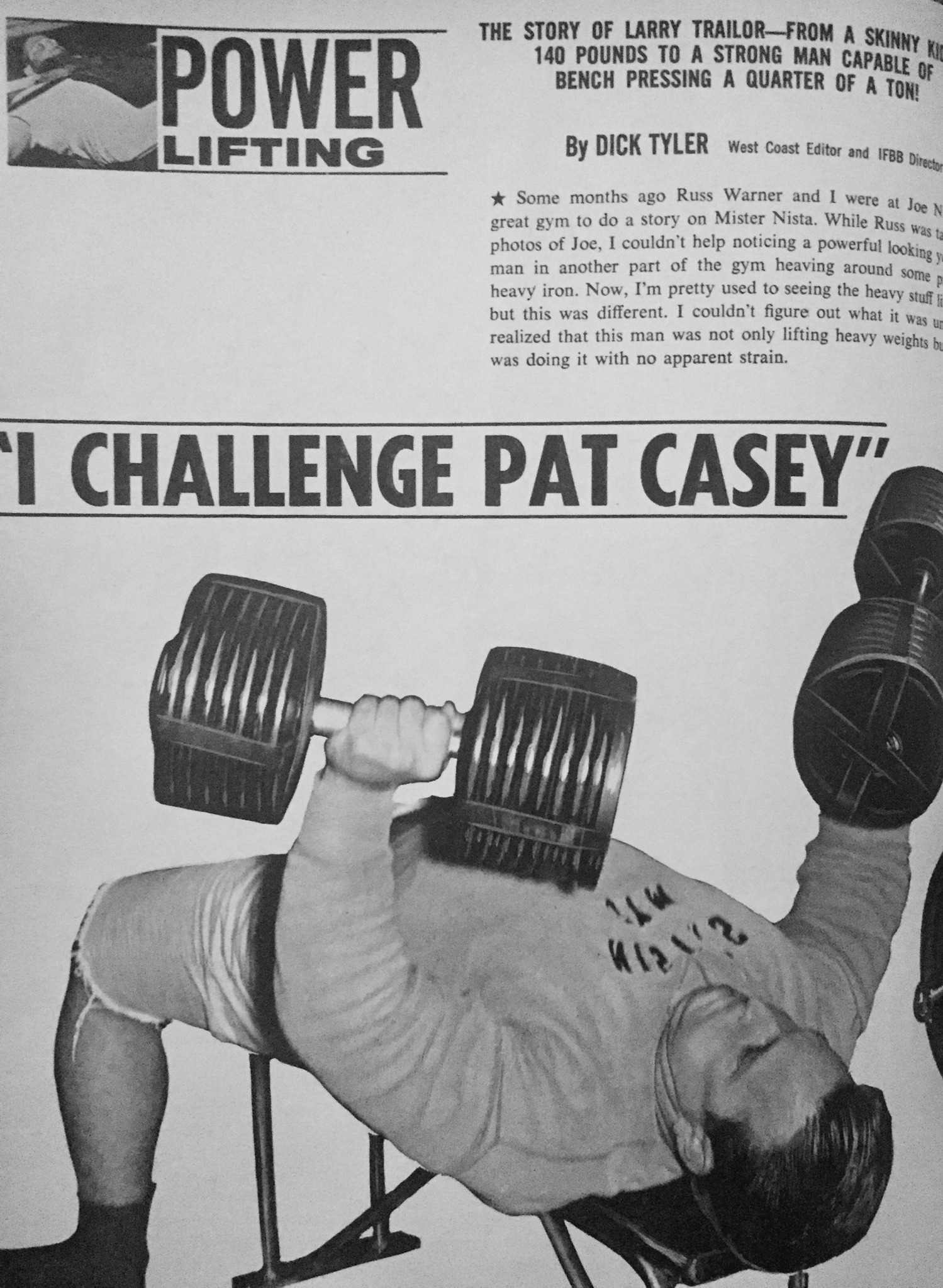
- Dynamic Effort, for the development of speed / power
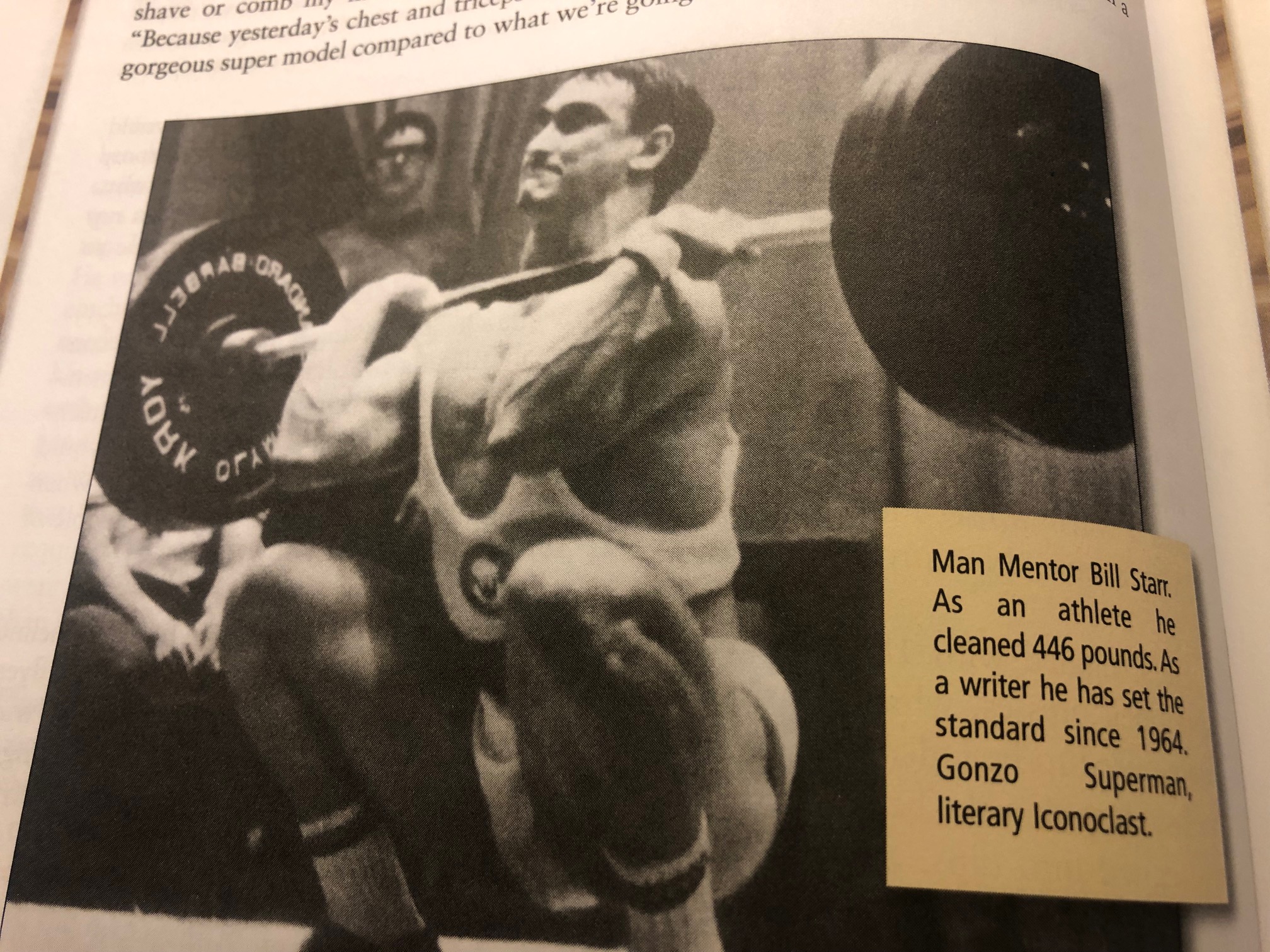
But, after each workout, they finish off with basic bodybuilding work, using moderate weights and moderate reps, which helps pack on muscle. Now, here is where you wanna pay attention. A typical athlete, not ALL, but MANY, need to add muscle to their frame before we can even think of using pure athletic movements to improve their performance.
MOST athletes are so skinny and so weak that simply by adding muscle to their frame we improve performance. It’s like looking at a tiny car engine…. a small car engine can NOT be manipulated to make it more powerful.
The optimal way to blend everything together is to organize an athletic workout like this:
1) Begin with a warm up. While warming up, mix in mobility, flexibility & soft tissue work.
2) As the warm up intensifies and the mind & body begin feeling prepared, you begin incorporating some speed / power work (See THIS DVD for the best Explosive Power Exercises). A beginner will likely NOT be ready to perform simple jumps such as box jumps, rebound jumps, etc due to lack of coordination & lack of strength & stability. But…. you CAN very likely utilize various medicine ball throws to begin training for power / speed.
I also HIGHLY recommend jumping rope during the warm up to increase athleticism, coordination, improve foot work and utilize the jump rope as a simple form of jumping. I am STILL in SHOCK at how many high school kids do NOT know how to jump rope. It speaks poorly of the Physical Education programs being used in the USA.
3) After the warm up and the speed / power work has been utilized, go into a heavy full body lift, or, heavy upper or lower body lift. Heavy for one might NOT be heavy and intense for another. A GREAT and simple variation for beginners and intermediates is the tried and true 5 x 5 method.
4) After you finish the heavy lift or what I like to call our “main lift” you can then move onto “functional bodybuilding exercises” but use them with moderate reps which is where your bodybuilding will come in.
A set – rep pattern of 3 – 4 x 8 – 15 reps works great on these lifts. It’s a GREAT way to build muscle and if you want to add some conditioning then create a circuit with 2 – 3 exercises and perform them back to back to back to combine muscle building with muscular endurance.
Listen to how one of the most feared powerlifters on earth would train after he finished his “Main Lift”. Watch the video below…
Now, these were certainly just a few methods for adding and utilizing bodybuilding methods to help you become stronger for life, lifting AND sport.
Build up that foundation by building muscle FIRST. This is why we don’t skinny bastards deadlifting and power cleaning with tight technique, it’s often times because their muscles are too damn weak or, they simply Do NOT have muscle to begin with.
Live The Code.
Peace
–Z–
PS: The cool think about bodyweight training is it can be used for beginners, intermediates and advanced. Check out THIS program where you get built up the right way and progressively move into free weights. Time to become Agile, Mobile & Hostile! Click HERE to get started.
I’ve got some QnA from the e mail side of things. I LOVE doing these QnA Vids and it’s tough to keep up with them, but this was a GREAT one, check it out, all about being Explosive! I believe that strength AND power must be blended together, I explain in detail below…
These videos are my most influential people / methods when it comes to training for explosive power as well as some footage of our athletes in action. Check it out, enjoy it and please SHARE on facebook and twitter!
Remember that OLD school tune with Rage Against the Machine, “Know the Enemy”?
Yep, Yep… well, with training, it’s the same difference.
After training for 22 years I am still learning more and more about my body, sometimes, ya gotta learn the HARD way.
The other day I saw a video of Louie Simmons hitting rack pulls, I was inspired, and decided I too, need to do rack pulls.
Problem is, I’ve been injured on them before, even with light weights well below my max.
Well, as my boy Jonny Hinds says, we’re part of the knuckle head crew. We KNOW not to do certain things but we still do them.
Squats of all types and trap bar deadlifts work plenty fine for me, and, eventually, ya just gotta cut your losses and eliminate some movements.
Heavy rack pulls and even light rack pulls don’t get me stronger OR make my back feel good.
Speed deads work great for me and yes, NO deadlifting works quite well, too.
I remember when I first opened my gym, I was in there a lot and wanted a lil’ change of scenery and some motivation. I decided to train at the gym next door as I was about to deadlift. I knew that people watching me would fire me up.
I hadn’t deadlifted for 2 months! But…. I had been doing plenty of similar movements such as squats with barbells, kettlebells, sandbags and even stones.
I was also doing lots of sled work at the end of each workout as well as 2 – 3 trips during my warm ups.
What happened?
I went in and deadlifted 515 for an easy single, beating my best 500 lb deadlift. I realized then I didn’t need to deadlift to break a deadlift record, but, sometimes we fall in love with an exercise and overdo it.
Be smart and LISTEN to your body, do what it tells you to do. Right now, I am in rest & recovery mode, something I haven’t done since I graduated from undergrad and finished a stressful 4 month internship. My body was wiped out as was my body. I rested and stopped training until my body told me it was time to get back in action.
The Bench Press is awesome, BUT, if it kills your shoulders even after you’ve worked with experts in the field to make it better, f**k it, get rid of it and do what works and what feels good for YOU.
Don’t be afraid to veer from a program that you love, but may be causing you some bodily harm. The more you train the more things change – your body begins to respond to things differently and you need to keep tweaking your program to find what does two things for you:
1) What makes you stronger, bigger, faster, etc – improves overall performance
2) What makes you feel GREAT, not just good, but GREAT. If the training bangs you up, change it up and drop out of the knucklehead club.
In Strength,
–Z–
PS: I’ll be laying low on external resistance until my body tells me it’s time to get back to it. As I am in rest & recovery mode, my next assault will be on taking my bodyweight & gymnastics based drills to a new level.
Martin Rooney and I talk about what life is like as a Strength Coach and give you a preview of what’s about to go down with “The Human Crane”.
Check the video and pay attention….
When I saw Martin box squat 405 for the easy reps it made me re-think and realize the carry over his training has towards his absolute strength.
I’ve seen Martin Bench Press 315 for a solid 6 reps and he weighs around 200 lbs, lean and mean.
The regular practice of sprints and bodyweight training have had a tremendous carry over to his strength, and these are NOT just my observations only. Martin told me that from doing all his push up variations and other challenging bodyweight movements so often they have a tremendous carry over to his powerlifting.
There is much talk about training philosophies, methods, and methodologies. It seems everyone has their own, which they devised on the basis of their own experience. They recommend such strategies as doing reps to failure to eliminate assistance work and doing only the squat, bench press, and deadlift.
Have you ever wondered what the author has accomplished as a lifter, a trainer, or a scientist? Did they ever total Elite or field a team of Elites at a national meet? Did they ever make a top ten lift in one or more categories? Or is what they are doing a personal philosophy with no proven results?
It has been asked what philosophy Westside adheres to. The answer is none. We use training methodologies and the science of methods. Everything we do is based on a scientific principle.
We can not be so arrogant as to form a personal philosophy. At Westside, we are responsible not only for our own training but for the training of our loyal readers. Many of our “extended members” have become national, world, and European champions.
Training is not as simple as doing five sets of five reps, five sets of ten reps, or any combination of sets and reps. You must plan to obtain certain objectives. Increases in speed, explosive strength, absolute strength, and stamina are equally important. It has been known and discussed in Weightlifting for All Sports by Ajan and Baroga that a greater training result can be obtained over a greater length of time by using special exercises than by doing the classical lifts.
Doing the same exercises repeatedly will rapidly decrease your coordination. There are many reasons for this. Our observation is that very few lifters can increase their abilities without special exercises.
How do we train heavy continuously? The answer is to pick several special barbell exercises for a particular lift (e.g. the deadlift). The good morning is very similar in motion to deadlifting.
A conventional deadlifter will no doubt bend over. Therefore, bent over good mornings will increase the deadlift. But remember, when doing the good morning, you must duplicate the action of your deadlift precisely in your brain. It is not so important to raise your good morning as it is to raise your deadlift by performing the good morning. We do many types of good mornings such as one with a safety squat bar suspended from chains. Remember to use the same body mechanics as you do in the deadlift.
Conjugate Method
A question that should be addressed is, when handling max lifts, how do you recover? And how do you at the same time increase muscle mass? The conjugate method is the answer.
This is a complex method of rotating special exercises that are close in nature, in our case, to the power lifts. This method also increases special strength qualities and perfects coordination, which will help advance technical skill.
First, and most important, is to properly select exercises that address your particular problems. It could be an exercise that will build up a lagging muscle group or a special strength such as starting, eccentric, or accelerating strength.
Many methods are combined and rotated in the conjugate system. Combining the speed and max effort days, five elements of strength are trained:
This is much like a five-speed transmission in a car. We all know what happens if you miss a gear or take off in the wrong gear. Your car doesn’t run very efficiently and neither will you. One must learn many methods to develop special strength and when to use them. You must also know your sports’ goals. In some sports, speed is foremost and absolute strength is secondary. Both are more closely related than you think.
When lifters repeatedly use the same simple method of training to raise their strength level, they will eventually stall. Like the scholar who must utilize many sources of information to achieve a higher level of knowledge, the lifter must incorporate new and more difficult exercises to raise their standards.
Many have the theory that to squat, bench, or deadlift more, you simply have to do the three lifts. If it were that simple, no one would need special exercises, machines, or systems of training. But we know this is not true.
Because lifters have different body types, they may excel at one lift but struggle with another. The great Lamar Gant was the only lifter I have known who held the world record deadlift and bench at the same time. There are men who hold three world records in the deadlift, yet can’t make the top ten bench list. Their muscles in the upper body are, I’m sure, as strong as anyone’s, but they are limited by body structure (e.g. short torso, long arms). Many of us are affected by this. But is there an answer?
In the early 1970s, the Dynamo Club in the former Soviet Union had 70 highly skilled Olympic lifters. They were introduced to a system of 20–45 special exercises grouped into 2–4 exercises per work out and were rotated as often as necessary to make continuous progress.
They soon found out that as the squat, good morning, back raise, glute ham raise, or special pulls got stronger, so did their Olympic lifts. When asked about the system, only one lifter was satisfied with the number of special lifts. The rest wanted more to choose from. And so the conjugate system was originated.
When you have a body type that lacks say the muscles that squat and yet you squat on a regular basis, then a coupling of special exercises for the glutes, hamstrings, hips, and lower back are needed to fortify those areas. These special exercises will enable you to raise your squat once more.
Think about it. If you read only one book, you will only learn so much no matter how many times you read it. If you only squat, you will get only so strong because no new stimulus is introduced. This may not happen in the early stages of training, but as you become more advanced, you will need a more strenuous method of training. This training will indeed help your motor potential and help you to perfect your technical skill.
Before I present some examples of conjugate training, think about this. How much could you bench press the first time you tried? 200? Maybe 300? Now, how did you achieve that level of strength without ever having benched be fore? You did it through simplified training such as pushups and pull-ups. Those of you who could bench 300 the first time will never double that amount without doing specialized work to raise your strength, right?
Here are some examples of the conjugate method:
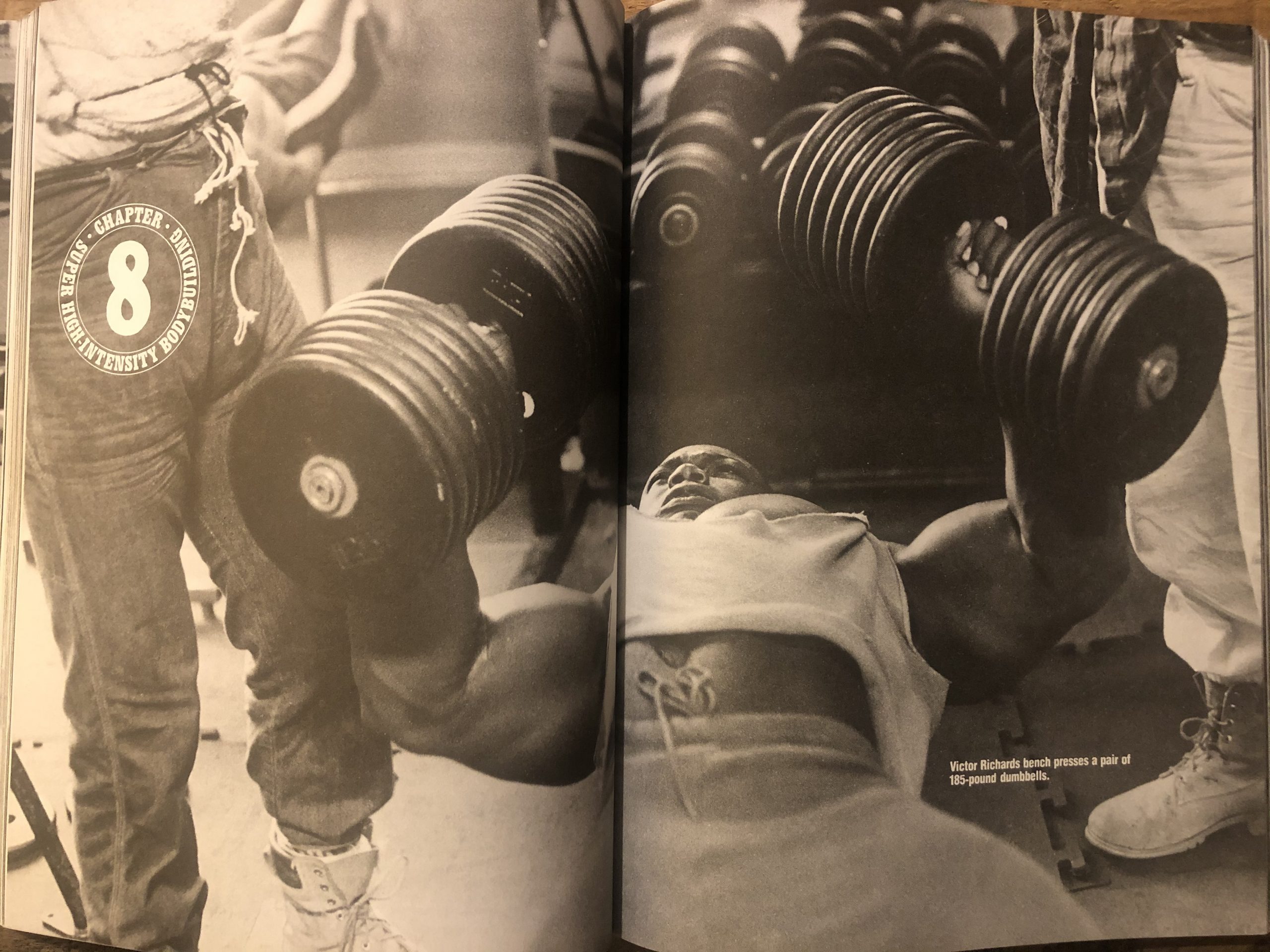
Glen Chabot bench presses only twice a month. Both times, he uses a close-grip style. He can do 405 for reps in the low teens. His best single close grip is 635 without a shirt. In between each workout, he rotates heavy dumbbell work on a flat or incline bench or very heavy bodybuilding exercises for lats, delts, pecs, and triceps.
This linking of special exercises has given Glen a 705 bench press at 275. Glen does not arch when he benches and has fairly long arms. He realized that he needed a special program to fortify his pressing muscles. This is a simple but very effective training program.
Kenny Patterson had a more complex system. He did floor press, chain presses, board presses, incline presses, and overhead presses, just to name a few. He rotated a different exercise each max effort day. On dynamic day, Kenny used three different grips on the bench press and used 60% of his no-shirt max for eight sets of three reps. He added many triceps extensions with dumbbells or the barbell, rows (one-arm, two-arm, chest-supported), pulldowns, delt raises, and forearm work.
This is a more complex system than Glen’s, but it suited Kenny’s needs. Kenny was a legitimate 700 bencher, having done it several times across the country.
Back in 2001, me and Mike Ruggiera made 900 squats. It was a 50-lb increase for him and a 40-lb increase for me, yet we did not do a single regular squat in between meets. We did box squats on speed days with a large amount of bands and weight. We also used the reverse hyper machine and did glute ham raises, pull-throughs, and abs.
I pulled a weighted sled before my squat workouts. On max effort day, we did good mornings (five varieties), belt squats, speed deadlifts (60% for 6–8 singles), and safety power squat bar squats to different box heights. Mike also pulled his fi rst 800 deadlift without having done any conventional squats or big deadlifts.
After squatting, he did deadlifts for singles with 60% for speed, and three days later he maxed out on special work. This is the conjugate method.
To push up a squat, heavy good mornings or squatting with different bars is done on max effort day. The different bars make squatting very awkward and extremely hard to do, much harder than a regular squat. (The same is true of box squats. They are harder than competition squats.)
On max effort day, we may do a type of squat in week one, a good morning in week two, and a front squat in week three. Each exercise contributes to the next week’s exercise, which in turn will build a bigger squat by strengthening the weaker muscle group and perfecting form.
The training is linked together, enabling you to raise your total. For instance, to build the glute and hamstring area, push up your reverse hyperextensions as hard as possible until your progress slows. Move on to pull-throughs for a week or two until progress in these slows as well. Then go to glute ham raises and again push as fast and hard as possible. Then pull a sled walking forward to build the glutes and hamstrings. It is possible to continuously gain strength in any body part by switching special exercises. As the effectiveness of the exercise decreases, switch to another one.
By training in this manner, it is possible to raise all types of strength throughout the year.
On max effort day, the entire volume consists of unidirectional loading. One training workout contributes to the next. Keep in mind that if you train a lift at 90% or more for more than three weeks, your central nervous system is negatively affected and your progress will go backward. But by switching exercises each week (for the high level lifter), you can use 100% and more each week.
The sequence of exercises you use doesn’t matter just as long as the load is maximal. The time it takes to do a maximal effort (i.e. a low box squat with a Manta Ray) lift is at least the same amount of time that it takes to do a max deadlift or squat. This is called “time under tension.”
The conjugate method also improves special physical preparedness (SPP) (e.g. speed deadlifts, plyometrics) and general physical preparedness (GPP) (e.g. sled drag ging). This is the most effective method to gain strength continuously throughout the year with no ridiculous off season.
No one can afford to take time off. By maintaining the speed work for the three lifts and increasing general work (e.g. upper and lower body sled work, lats, abs, triceps), you won’t go backwards. There are many methods of training, but by incorporating the conjugate method, you can’t miss.
A popular special exercise for the deadlift is squatting off a very low box. Angelo Berardinelli does his off a six-inch box. At this depth, Angelo’s back is in a position similar to his sumo deadlift style. We use a safety squat bar very often. When raising out of a squat or deadlift, the shoulders should raise first. The five inch camber on the safety squat bar teaches you to raise the head and shoulders first. Otherwise, you will buckle over forward.
To summarize, pick a core lift with a barbell and try to duplicate the same motion of the lift that you’re trying to increase. Pick 4–5 core exercises that work for you and rotate one of them every two weeks. Do a max single for a 2-3 rep max, but no more.
For example, you could do bent over good mornings, safety squat bar squats, Zercher squats, or very low box squats and then finish with two weeks of rack pulls. This represents a ten-week cycle, rotating each of the above exercises in two-week mini-cycles. It is important that you end with the most productive exercise for you leading into the meet.
After your selection of a core barbell exercise, pick 3–5 special exercises. Your workout should last less than 60 minutes. Pick a few special exercises and do them very intensely.
If your form is good, then your lower back may be holding you back.
Again, select four exercises for the lower back such as back raises, straight leg deadlifts off a platform, pullthroughs with the legs straight, and reverse hyperextensions. Rotate them when necessary. For weak hamstrings, do heavy reverse hyperextensions, squatting pull-throughs, glute ham raises, and sled pulling with your hands behind your back or below your knees while holding onto a strap.
For weak glutes, do heavy reverse hyperextensions, low belt squats, high rep deadlifts (two sets of 20 with back arched, glutes pushed out to rear, shoulder-width stance, hands outside shoulder-width; after the first rep, drop the bar to just below the knees, and catch and raise it as fast as possible for the entire 20 reps), and glute ham raises. If your abs are weak, do side bends with a cable bar or dumbbell, leg raises, standing lat machine curl-overs, and strict sit-ups.
Again, pick one exercise for each muscle group, use it until it becomes ineffective and then switch.
For the bench press, you could do board presses, floor presses, inclines, declines, or rack lockouts for singles. Rotate one of these every two weeks. You could do ultra wide bench presses for a 6RM or three sets to failure with dumbbells with a two-minute rest between sets for singles and a 5–6-minute rest for high reps. Then pick some type of triceps extensions with a bar or dumbbells, some type of lat work, and raises for the front, side, and rear delts.
There are many types of exercises for each muscle group. Just change when one stops working, and your lifts should continue to increase all year long. By training with this system, you can max out every week of the year while working continuously on speed and building muscle mass. It works for us, and it will work for you. It is the most effective form of training we have ever tried, and in the past 36 years, Westside lifters have tried them all.
Just remember, it’s the selection that counts. You must pick a lift or exercise that builds your particular weakness. Don’t get caught up in doing an exercise that your friends like but that does little for you. George Halbert has special exercises he uses for his bench. Chuck Vogelpohl does things that no one does, but they help his squat and deadlift. Amy Weisberger did front and overhead squats to help her squat.
=====
Part II Coming Soon
=====
For more info on Louie’s Westside Barbell Methods, guaranteed to get you Strong as Hell, Click HERE. If you’re a Strength Coach, Athletic Coach or simply want to make dramatic gains in your Personal workouts, this is a MUST read book that I have learned tons from and can’t put down. Check it out HERE.
Lead from the Front,
–Z–
PS: Be smart when applying methods you read or learn from others and elsewhere. Do I personally use and apply EVERYTHING Louie speaks of? NO. I learn through trial and error what works best for me and my athletes and adapt accordingly, as should you.
Is there truly an ART or a Science to getting strong as hell? Hmmmmm…… Ask Louie Simmons and he will say yes, Jim Wendler will also drop his genius with his 5/3/1 program, allowing him to keep getting stronger….and STRONGER.
But, when in doubt, just lift heavy shit with PROPER technique.
You can do high sets and low reps such as 12 x 2 reps OR…. try Hellish set – rep paramaters like 5 x 10 on movements such as the Barbell Clean & Jerk, Deadlifts, Kettlebell Snatch, etc.
Coach Reeve was always training against the clock when he was a competitive wrestler and a college wrestling coach, and, he still does it today with the Football players of Wake Forest.
Not only does this style of training build serious strength and dense muscle, but also develop immense conditioning and mental toughness, something too many people lack nowadays!
Try This: 2 reps on the minute, every minute for 10 minutes of (Choose Any One Exercise) the log clean & press, tire flip, sandbag shoulder, stone shouldering, deadlift, barbell clean & press….
I’ve done this with athletes using heavy weights if they need to gain weight and fighters, wrestlers and combat athlete who need strength endurance / power endurance.
And by the way, if you’re resting 3 – 5 minutes between sets because your last scientific handbook told you to do so you’re missing the boat.
In the REAL world, when the hell do you get to do 2 reps and rest? Learn to push heavy weights with minimal rest and as I mentioned before, using proper technique.
I’ve seen some dangerous form being used in local gyms and even by popular web sites on the internet. It sends the wrong message, and you can’t create a powerful message unless You Lead From the Front.
Time for me to get some rest, the alarm is set for 6:30 AM tomorrow morning. It’s training time. That means heavy weights followed by prowler conditioning.
Check out some footage below.
You may also have noticed less video footage from me. I will get back to the videos, so don;t you worry, BUT, I am zoning out when I train and hate to mess around with a video camera when I am focused on getting STRONGER, FASTER, LEANER & MEANER!
That’s me hitting some thick bar deadlifting and the Prowler Pushing with 9 plates is one of our Freshman Football Beasts, we call him “The Hit Man”.
Got an AWESOME video for you, it is a bit long, 12 minutes, so grab some coffee, or a protein shake or maybe some fruit and veggies….but NOT all of them at one sitting!! ha ha
Enjoy this video and drop a comment to add your own “Favorite” list when done!
I’m psyched to hear about your list!
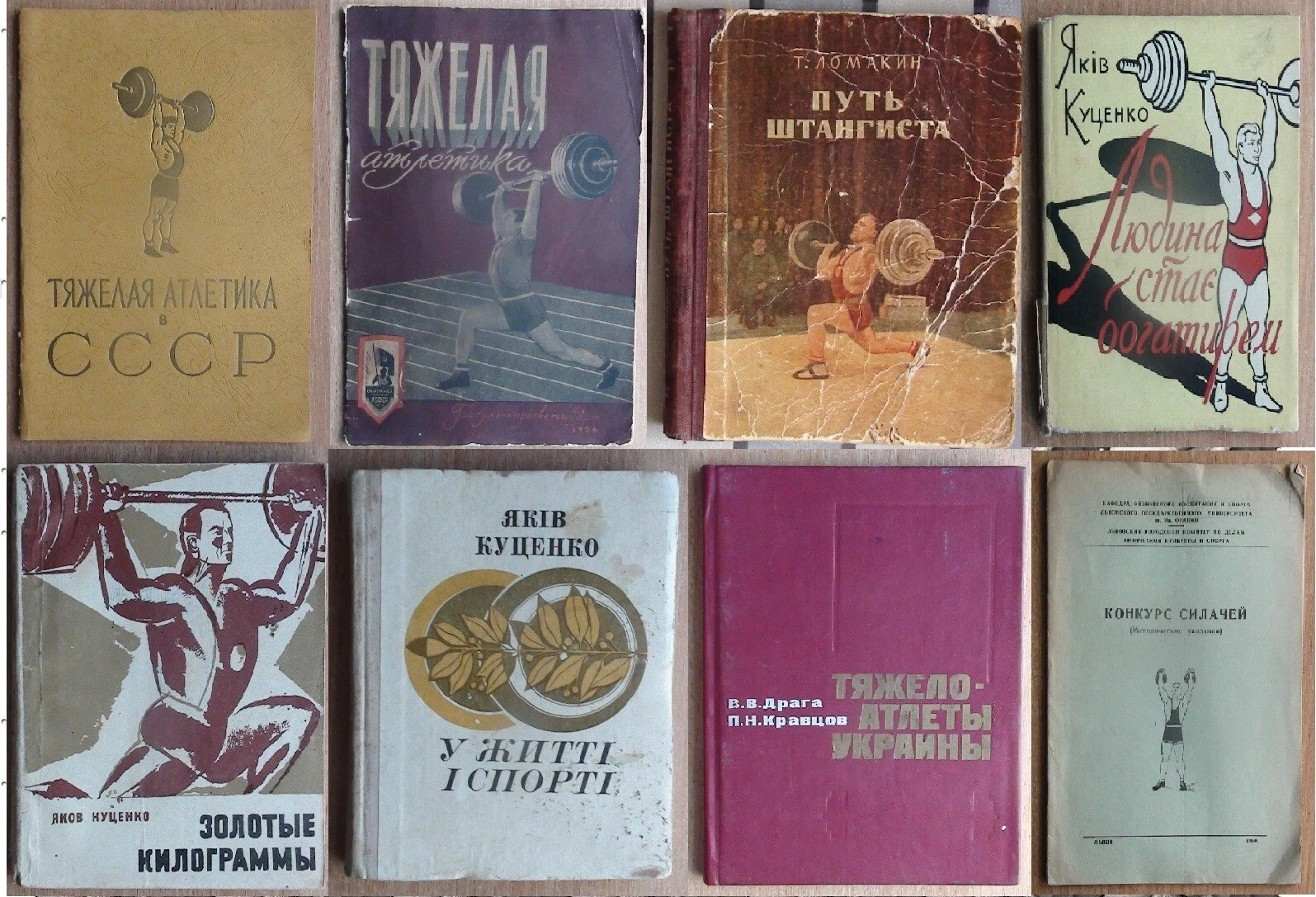
I left a few books out and will have to catch up on them for you soon enough
Next time I might do my favorite books on mind set, after that, favorite books on business.
If you wanna see those videos give me a “Hells Yea!” in the comments area below and don’t forget to add your own list of favorite bodybuilding, sport training, powerlifting and strength training books.
Below are some links to most of the Books I just featured.
All ya gotta do is Click on the book title for more info.
PS: I have some HUGE changes to be coming for http://UndergroundStrengthCoach.comthat will fire you up and light up your world. I can’t reveal exactly what it is just yet but you will love it.
PPS: 1 Day Underground Strength Mentorship coming up around the corner, November 14th. If you want to learn the secrets of running your very own, hardcore fitness business, without breaking the bank, this is your GOLDEN ticket
Below, Joe talks about training young athletes, how to build relative strength, how to add muscle, how to progress them into the infamous ‘Westside for Skinny Bastards’, bodyweight training standards and much more.
Enjoy the interview and drop a comment below if you want to add or have a comment or question!
Was that interview bad ass or what!?
Drop a comment and join in on the discussion.
Peace and thanks for stopping by!
–Coach Z–
PS:If you dig this Blog please share with your friends with the links below: facebook, twitter or any of your favorite social bookmarking sites. Thank you in advance for sharing AND watching! I am honored and psyched that you Love it here!
PPS:Lost Secrets of Strength is literally flying off the shelves, as this is a Limited Edition, you want to act fast and snag your copy before they’re all gone! Get Your Copy HERE!
PS: I am getting a lot of e mails regarding the business side of what I do and how I turned my $5 an hour training of clients into a full fledged business that allowed me to leave my job that payed me $93 grand a year….and, the gym is run part time.
If you want me to create a business program for what I do, hit me up with an e mail and let me know exactly what you need ==> UndergroundStrengthCoach@gmail.com
Check out what happens when my college wrecking crew hijacks my flip cam and gets a lil’ wild on the bench press.
Don’t Forget…Drop a comment with your thoughts…
These guys love to bench big but don’t worry, this movement is cycled in / out of our program.
In fact, I would say that we floor press at least 75% of the time compared to the full range bench press.
But, my homeboy and Bench Press extraordinairre, AJ Roberts from Westside Barbell Club sent us a few sample templates on how these beasts can jack up their bench press, and now he has a Free course that you can check as well.
When someone like AJ talks and brings his knowledge and experience to the table regarding how to get STRONG, I listen.
Recent Comments