westside barbell
There are a few things that will help YOUR deadlift. Notice I put the CAPS on. What works for me may not work for you and vice versa. YOU must find the things that help and then dial them in. Here’s a few tips that you should test drive.
Read more on Improving The Deadlift…
Share and Enjoy
Filed under Articles, Strength Building, Underground Strength Show, Videos, Zach's Workouts, freak strength friday, muscle building, old school strength by admin on Feb 3rd, 2012. 17 Comments.
Can bodybuilding methods help improve athletic performance?
Well, that ALL depends on HOW you use bodybuilding and IF the athlete needs bodybuilding methods. When I use the word “bodybuilding”, I am merely talking about the method of packing on muscle. Don’t be confused….. so, let me explain.
And, a critical note to determine IF the athlete should use some bodybuilding methods for packing on muscle is described in this short, 57 second video:
Hold on to your thoughts there with what Louie Simmons just said regarding NOT adding muscle mass because I am NOT talking about world class athletes in this article although what he JUST said is what we are careful with during the in season for our wrestlers, allowing them to maintain weight, rather than gaining weight / muscle mass in season and STILL becoming stronger and more explosive in season.
What is NOT “Athletic Bodybuilding”?
I was recently at a “hardcore” gym and there were bodybuilders there…. sort of…. kind of…. NOT the kind of hardcore I was once upon a time used to at Diamond Gym. I think “hardcore” has lost it’s “Hardness” through the years. So maybe this was soft core….. or something…..
These “bodybuilders” were sitting on machines, performing 1 arm cable exercises out the ass and ALL while wearing gloves, cut off short, short jeans and a weightlifting belt. That is NOT the bodybuilding I wanna see. It will NOT carry over to the athletic field.
TWO things to do when using bodybuilding methods for athletes is:
1) Choose the right exercises
2) Choose the right set – rep patterns to stimulate muscle growth
As mentioned above, You can use bodybuilding for athletic performance by choosing the right exercises, sometimes referred to as functional exercises.
Movement such as squats, deads, presses of all types and bodyweight exercises as well. The way to pack on muscle will be via manipulating the sets, reps, speed of the exercise and the overall volume of work.
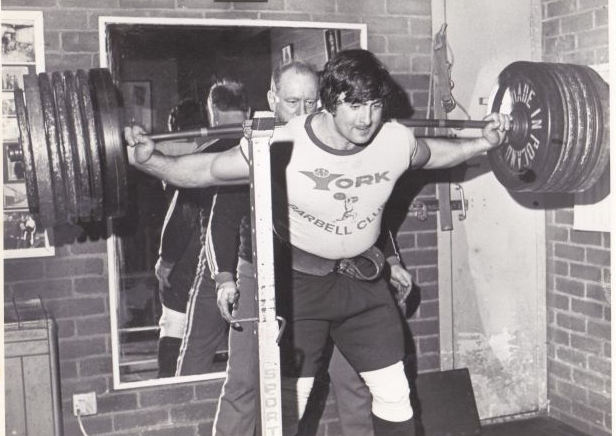
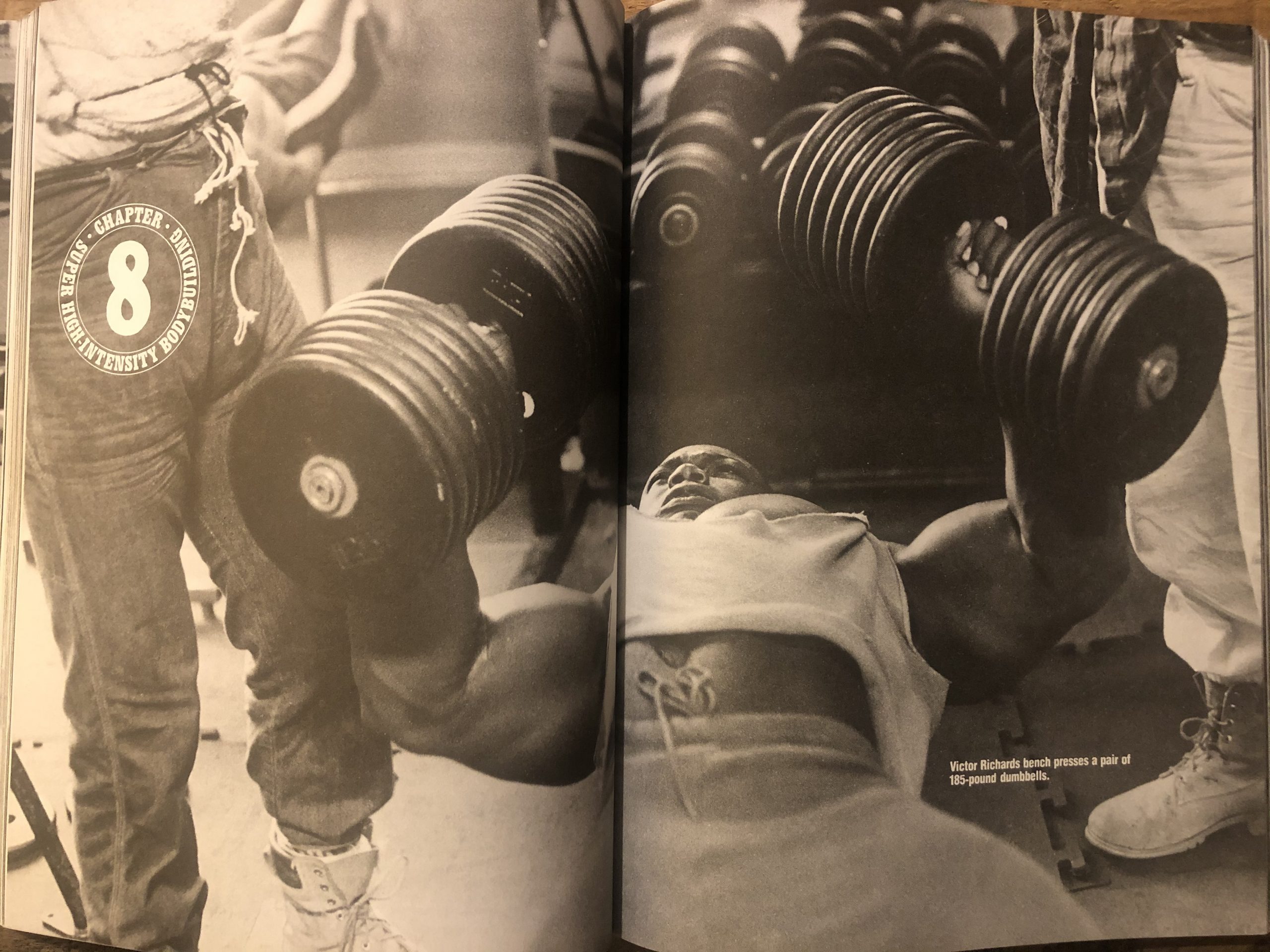
The powerlifters from Westside Barbell, known as the strongest gym in the world, perform 2 types of workouts:
- Max Effort, for the development of strength
- Dynamic Effort, for the development of speed / power
But, after each workout, they finish off with basic bodybuilding work, using moderate weights and moderate reps, which helps pack on muscle. Now, here is where you wanna pay attention. A typical athlete, not ALL, but MANY, need to add muscle to their frame before we can even think of using pure athletic movements to improve their performance.
MOST athletes are so skinny and so weak that simply by adding muscle to their frame we improve performance. It’s like looking at a tiny car engine…. a small car engine can NOT be manipulated to make it more powerful.
The optimal way to blend everything together is to organize an athletic workout like this:
1) Begin with a warm up. While warming up, mix in mobility, flexibility & soft tissue work.
2) As the warm up intensifies and the mind & body begin feeling prepared, you begin incorporating some speed / power work (See THIS DVD for the best Explosive Power Exercises). A beginner will likely NOT be ready to perform simple jumps such as box jumps, rebound jumps, etc due to lack of coordination & lack of strength & stability. But…. you CAN very likely utilize various medicine ball throws to begin training for power / speed.
I also HIGHLY recommend jumping rope during the warm up to increase athleticism, coordination, improve foot work and utilize the jump rope as a simple form of jumping. I am STILL in SHOCK at how many high school kids do NOT know how to jump rope. It speaks poorly of the Physical Education programs being used in the USA.
3) After the warm up and the speed / power work has been utilized, go into a heavy full body lift, or, heavy upper or lower body lift. Heavy for one might NOT be heavy and intense for another. A GREAT and simple variation for beginners and intermediates is the tried and true 5 x 5 method.
It’s a great blend of strength and muscle building. I also like Jim Wendler’s 5 3 1 method.
4) After you finish the heavy lift or what I like to call our “main lift” you can then move onto “functional bodybuilding exercises” but use them with moderate reps which is where your bodybuilding will come in.
A set – rep pattern of 3 – 4 x 8 – 15 reps works great on these lifts. It’s a GREAT way to build muscle and if you want to add some conditioning then create a circuit with 2 – 3 exercises and perform them back to back to back to combine muscle building with muscular endurance.
Listen to how one of the most feared powerlifters on earth would train after he finished his “Main Lift”. Watch the video below…
Now, these were certainly just a few methods for adding and utilizing bodybuilding methods to help you become stronger for life, lifting AND sport.
Build up that foundation by building muscle FIRST. This is why we don’t skinny bastards deadlifting and power cleaning with tight technique, it’s often times because their muscles are too damn weak or, they simply Do NOT have muscle to begin with.
Live The Code.
Peace
–Z–
PS: The cool think about bodyweight training is it can be used for beginners, intermediates and advanced. Check out THIS program where you get built up the right way and progressively move into free weights. Time to become Agile, Mobile & Hostile! Click HERE to get started.
Share and Enjoy
Filed under Articles, Strength Building, Underground Strength Show, Videos, Zach's Workouts, muscle building, old school strength by admin on Dec 12th, 2011. 16 Comments.
There are some men who REALLY have my respect, a very rare few.
Jim Wendler is one of those guys, and, every time we chat I am reminded why.
We’re both very simple men. We chase strength and train because we understand that man is supposed to be strong and if you’re a Dad, then you need to be even stronger, inside and out.
You train your body to prepare your mind for life and any craziness that might be thrown your way. When other men crumble under the pressure and stress, you thrive and emerge the victor.
It sounds arrogant but it’s not, it’s the truth. A strong man can handle life’s curve balls and never back down. A weak man allows life’s circumstances dictate the outcome. F**k that.
A Man’s training isn’t for aesthetics or looking good in a bathing suit, it’s for the honor of being a man. When you don’t want to lift you remind yourself that you are lucky to have arms and legs to be able to “lift”, so it’s time to Man the F**K UP!
Read more on Man UP Monday & Dr. Jim Wendler…
Share and Enjoy
Filed under Articles, Kick Ass Life, Strength Building, man up monday, old school strength by admin on Oct 3rd, 2011. 7 Comments.
In the videos above you saw me struggling out an ugly 505 deadlift!
That’s ANNOYING to be shaking that little weight up.If it was 600 + lbs then I wouldn’t be so upset.
You see Dillon, weighing 165 lbs deadlifting 455 lbs easily, his best deadlift is closer to 550 lbs, note his body structure, perfect for the deadlift, the long arms and big hands is what is known as a knuckle dragger. The kid is a BEAST….. gotta respect that!
Lesson Learned: Someone needs to get stronger. That person is ME. Period.
What about you? Satisfied with your strength and gains? Hopefully not.
Now, on to our next video. We have Mark Bell talking about the ferocious intensity when training with powerlifting legend, Chuck Vogelpohl.
Sounds like Chuck would hit his heavy work and then get busy attacking supplemental work in a circuit fashion. I also heard Chuck did LOTS of “warming up” prior to his actual workout: LOTS of ab and lat work, sled drags, reverse hypers and more.
Can one actually be strong AND in shape? Absolutely. Believe it or not, this was more of the case back in the 70s and prior. Nowadays, too many powerlifters or strength fanatics believe they need to pack on the pounds, unfortunately, these pounds come in the way of useless fat.
If you’re like me, and need to crunch strength, power and conditioning into one workout, try the following set up for your next few workouts, go ahead test drive it:
1) warm up with a variety of movement, soft tissue work, some abs and calisthenics
2) Hit the Heavy S**T First – don’t be afraid to sneak in some pull ups and ring push ups or abs between sets
3) Perform your supplemental work in circuit fashion but still HEAVY. You can see this in action during my leg workout in this video.
4) Finish with sprints of any type. For me, I go to the parking lot next to my gym and perform sprints and acceleration drills.
This is a killer way to get in there, kick ass and take names and finish off with more soft tissue / recovery work.
Don’t complicate the workout, don’t look for fancy or make excuses.
The road to becoming a BEAST is not an easy road. I’m still travelin’, how about you?
Please leave your comments below.
Peace!
–Z–
Share and Enjoy
Filed under Articles, Q & A, Strength Building, Success, Underground Strength Show, Videos, Zach's Workouts, muscle building by admin on Feb 28th, 2011. 6 Comments.
Let’s recap the 14 Bench Press tips from Mark “Smelly” Bell, who holds a BIG 854 lb person best in the Bench Press.
1) When training for speed you will typically be around 40-60% of your max effort, although Mark has seen success with powerlifters using as low as 30%
2) The key to your dynamic work is exactly that, being FAST / EXPLOSIVE! If you’re not moving the bar fast then you need to lighten the weight.
3) Don’t mistake being fast and under control for fast and sloppy in technique. Technique is # 1.
4) Always control the weight and lower the bar down the same path. Don’t let the bar move in a wild manner where every rep looks different. Control.
5) If you’re new to dynamic effort training don’t try to drop the bar fast, instead, lower the bar for 3 seconds and then explode off your chest as fast as possible. As you get more experienced you can lower the bar faster.
6) A typical dynamic workout for the bench press will be 8 – 10 work sets for 3 reps using approximately 50% of your max effort weight.
7) After dynamic work on the bench press it’s best to follow up with repetition work in the 10-20 rep range.
ALWAYS smash your triceps after your bench press workouts
9) In general, always smash your posterior muscles as these are the muscles that will bring up your squat, bench and deadlift: hamstrings, glutes, back, triceps…
10) If you’ve hit a plateau in your bench press, it’s time to step back and assess your training. Focus on optimal training so you can progress regularly. If something isn’t working don’t be afraid to change.
11) Dynamic effort bench press training can wreak havoc on the shoulders, elbows and wrists, eventually leading to injury. Try alternating one week of dynamic work with a week of more controlled training and moderate reps.
12) Try using set – rep patterns such as 6 x 4 reps, 5 x 5 reps, 4 x 6 reps and then 8 x 3 reps. The varied set – rep schemes will still bring you the same volume in reps but will allow you to vary the weights and keep you from burning out or being under heavy percentages on the bench press too often.
13) Assess your body structure for the bench press. If you have long arms and flat shoulders your body might take a beating when benching. Long arms might respond better to using floor presses instead. Always focus on training optimally.
14) As you get more experienced with the bench press and as you get older and have lifted longer, you need to assess the cost / benefit ratio of each exercise. If the exercise makes you feel like crap and beats you up then avoid it and find an alternative. THINK about what you’re doing, don’t blindly follow a program without thinking how it will benefit you.
15) Leave a little in the tank, once again, this comes down to training optimally. Try not to miss reps or fail on reps. This will fatigue the nervous system and also affect your attitude towards training in a negative way.
Hope you enjoyed these Bench Press Tips from Mark “Smelly” Bell!
In Strength,
–Z–
For those who respect strength:
Underground Strength System (On Sale)
Share and Enjoy
Filed under Articles, Q & A, Strength Building, Success, Underground Strength Show, Videos, muscle building by admin on Feb 25th, 2011. 10 Comments.
My workouts have been going VERY good lately and after this past weekend’s seminar at my gym with Mark Bell and Jesse Burdick I have a gained a BIG time greater amount of knowledge AND respect for powerlifting and getting stronger and more explosive.
I have many more videos to share regarding last weekend’s powerlifting seminar so hang tight for these
This seminar seriously blew me away. The amount of knowledge I gained during my first 3 hours was awe inspiring. Jesse Burdick coached me and a crew through speed squats and then some heavy deadlifts during our first workout. EVERYONE was hitting PRs left and right, either in strength, speed or BOTH.
After 22 years of training, I NEVER felt like I knew it all or knew enough about training, I was ALWAYS hunting for more and better info for myself and my athletes. When Jesse and Mark spoke I listened to them as if I was a rank beginner, and, compared to their knowledge, I was! I asked over 50 questions on the first day. I couldn’t learn enough!
Ironically, I contacted a good 30 or 40 coaches throughout NJ, NYC and Pa regarding this seminar and NONE of them even replied to my e mails. I find it strange and somewhat annoying that Strength Coaches are not interested in learning how to become stronger from 2 world class coaches? Something about Strength Coaches not wanting to learn from two experts regarding strength, speed / power and training methods confuses me.
After all, if you’re a Strength Coach, Strength should be respected, right?
I get pissed when I see people NOT respecting strength, experts of strength or the tools of strength.
Strength Coaches should know and study from men like Ed Coan, Louie Simmons, Kirk Kaworski, Bill Seno, Mark Bell, Pavel, Marty Gallagher, etc. Educating yourself on training is similar to the approach you take towards training in general – consistency. You train regularly, you should also learn regularly.
You can learn TONS from watching video footage of people training: olympic lifters, powerlifters, etc. What can you learn from this video of Ed Coan, below? TONS. What about the inspiration that comes from this video?? TONS!!!
I can learn from anything: books, videos, seminars, phone conversations, e mails, etc. If you’re serious about breaking records and gaining strength then you should find a way to learn like this as well.
It’s time for strength to gain it’s respect once again. If you’re considering yourself a Strength Coach then you need to learn how to become strong and explosive. Period.
All this lack of respect began in the mid 90s, when fitness came onto the scene. Soon, there were skinny guys
on magazines who weighed 140 lbs sporting abs. Somewhere along the way being weak with 6 pack abs became the “In” thing for a large crew of people.
Hardcore gym owners somehow lost their brains and shut down their gyms thinking hardcore was over, BUT, they were WRONG. Hardcore strength addicts had nowhere to go, I was 18 or 19 years old when this happened, and I was left to find my own community because I felt alone and like odd ball out inside of a gym packed with people who looked at you strange because I was constantly chasing MORE strength and MORE muscle. Those who left either stopped training altogether or they built garage and basement gyms.
Heavy barbells and dumbbells, power racks for squats, benching and deadlifts. Dip stands and pull up bars. NOTHING fancy, just a burning desire to get strong as hell and jaaaazzzaaaaacked!
I’m sure the resourceful guys went to scrap yards to pick up anvils, used free weights and car axles for deadlifting with tires on each end.
If you respect strength, I’m proud of you! I’m disappointed in myself for being disappointed at the “Strength Fitness Coaches” for not even attempting to learn about strength. This seminar blew my mind and motivated the heck out of me!!
Now it’s time to pass on the great info to my athletes and Undergrounders around the world.
More videos to come, just wait and see!
Please leave your comments below, looking forward!
In Strength,
–Z–
How to Kick Ass Business Immersion Seminar
Share and Enjoy
Filed under Articles, Strength Building, Underground Strength Show, Videos, Zach's Workouts, muscle building by admin on Feb 22nd, 2011. 6 Comments.
After 3 hours of training ALL of us Broke Personal Records in the Deadlift.
NO Science, NO Bull Shit and NO Excuses.
Watch and Learn!
What else can I say?
I LOVE to lift and LOVE to be around motivated BEASTS.
Drop a comment with your thoughts, psyched to hear about what helps YOU break records!
Lead from the FRONT!
–Z–
Recommended Resources:
Underground Strength Coach Certification
Share and Enjoy
Filed under Announcements, Articles, Q & A, Strength Building, Success, Underground Strength Show, Videos, Zach's Workouts, muscle building by admin on May 3rd, 2010. 14 Comments.
I’ve become stronger in mind AND body since becoming a Dad. Something about being a family man pushes me and other Dads to become stronger than ever before.
Not all Dads do this, some fall off the wagon and become lazy, fat pieces of sh*t and have a million and one excuses as to why they have become weak.
In fact, it has happened countless times, where some fat ass Dad says to me, “I used to look like you. Then I got married, had kids….. You’ll see, it’ll happen to you.”
The fact of the matter is, NO ONE is just like me. I’ve gotten up well before the sun was shining to lift heavy weights, or, have stayed up till midnight to get in a lift. I don’t make excuses, I make things happen.
Check out a select few Deadly Dads Deadliftin. We ain’t your ordinary crew of Dads, that’s for damn sure!
If you’re a Deadly Dad, drop a comment below and tell us why you continue to be a BEAST!
Lead from the FRONT!
–Z–
Recommended Resources:
Underground Strength Coach Certification
Training for Warriors – THE Books!
Share and Enjoy
Filed under Articles, Calendar, Q & A, Strength Building, Success, Underground Strength Show, Videos, Zach's Workouts, muscle building by admin on Apr 27th, 2010. 46 Comments.
Article by Louie Simmons
There is much talk about training philosophies, methods, and methodologies. It seems everyone has their own, which they devised on the basis of their own experience. They recommend such strategies as doing reps to failure to eliminate assistance work and doing only the squat, bench press, and deadlift.
Have you ever wondered what the author has accomplished as a lifter, a trainer, or a scientist? Did they ever total Elite or field a team of Elites at a national meet? Did they ever make a top ten lift in one or more categories? Or is what they are doing a personal philosophy with no proven results?
It has been asked what philosophy Westside adheres to. The answer is none. We use training methodologies and the science of methods. Everything we do is based on a scientific principle.
We can not be so arrogant as to form a personal philosophy. At Westside, we are responsible not only for our own training but for the training of our loyal readers. Many of our “extended members” have become national, world, and European champions.
Training is not as simple as doing five sets of five reps, five sets of ten reps, or any combination of sets and reps. You must plan to obtain certain objectives. Increases in speed, explosive strength, absolute strength, and stamina are equally important. It has been known and discussed in Weightlifting for All Sports by Ajan and Baroga that a greater training result can be obtained over a greater length of time by using special exercises than by doing the classical lifts.
Doing the same exercises repeatedly will rapidly decrease your coordination. There are many reasons for this. Our observation is that very few lifters can increase their abilities without special exercises.
How do we train heavy continuously? The answer is to pick several special barbell exercises for a particular lift (e.g. the deadlift). The good morning is very similar in motion to deadlifting.
A conventional deadlifter will no doubt bend over. Therefore, bent over good mornings will increase the deadlift. But remember, when doing the good morning, you must duplicate the action of your deadlift precisely in your brain. It is not so important to raise your good morning as it is to raise your deadlift by performing the good morning. We do many types of good mornings such as one with a safety squat bar suspended from chains. Remember to use the same body mechanics as you do in the deadlift.
Conjugate Method
A question that should be addressed is, when handling max lifts, how do you recover? And how do you at the same time increase muscle mass? The conjugate method is the answer.
This is a complex method of rotating special exercises that are close in nature, in our case, to the power lifts. This method also increases special strength qualities and perfects coordination, which will help advance technical skill.
First, and most important, is to properly select exercises that address your particular problems. It could be an exercise that will build up a lagging muscle group or a special strength such as starting, eccentric, or accelerating strength.
Many methods are combined and rotated in the conjugate system. Combining the speed and max effort days, five elements of strength are trained:
1. quickness
2. explosiveness
4. speed-strength
5. strength-speed
6. absolute strength
This is much like a five-speed transmission in a car. We all know what happens if you miss a gear or take off in the wrong gear. Your car doesn’t run very efficiently and neither will you. One must learn many methods to develop special strength and when to use them. You must also know your sports’ goals. In some sports, speed is foremost and absolute strength is secondary. Both are more closely related than you think.
When lifters repeatedly use the same simple method of training to raise their strength level, they will eventually stall. Like the scholar who must utilize many sources of information to achieve a higher level of knowledge, the lifter must incorporate new and more difficult exercises to raise their standards.
Many have the theory that to squat, bench, or deadlift more, you simply have to do the three lifts. If it were that simple, no one would need special exercises, machines, or systems of training. But we know this is not true.
Because lifters have different body types, they may excel at one lift but struggle with another. The great Lamar
Gant was the only lifter I have known who held the world record deadlift and bench at the same time. There are men who hold three world records in the deadlift, yet can’t make the top ten bench list. Their muscles in the upper body are, I’m sure, as strong as anyone’s, but they are limited by body structure (e.g. short torso, long arms). Many of us are affected by this. But is there an answer?
In the early 1970s, the Dynamo Club in the former Soviet Union had 70 highly skilled Olympic lifters. They were introduced to a system of 20–45 special exercises grouped into 2–4 exercises per work out and were rotated as often as necessary to make continuous progress.
They soon found out that as the squat, good morning, back raise, glute ham raise, or special pulls got stronger, so did their Olympic lifts. When asked about the system, only one lifter was satisfied with the number of special lifts. The rest wanted more to choose from. And so the conjugate system was originated.
When you have a body type that lacks say the muscles that squat and yet you squat on a regular basis, then a coupling of special exercises for the glutes, hamstrings, hips, and lower back are needed to fortify those areas. These special exercises will enable you to raise your squat once more.
Think about it. If you read only one book, you will only learn so much no matter how many times you read it. If you only squat, you will get only so strong because no new stimulus is introduced. This may not happen in the early stages of training, but as you become more advanced, you will need a more strenuous method of training. This training will indeed help your motor potential and help you to perfect your technical skill.
Before I present some examples of conjugate training, think about this. How much could you bench press the first time you tried? 200? Maybe 300? Now, how did you achieve that level of strength without ever having benched be fore? You did it through simplified training such as pushups and pull-ups. Those of you who could bench 300 the first time will never double that amount without doing specialized work to raise your strength, right?
Here are some examples of the conjugate method:
Glen Chabot bench presses only twice a month. Both times, he uses a close-grip style. He can do 405 for reps in the low teens. His best single close grip is 635 without a shirt. In between each workout, he rotates heavy dumbbell work on a flat or incline bench or very heavy bodybuilding exercises for lats, delts, pecs, and triceps.
This linking of special exercises has given Glen a 705 bench press at 275. Glen does not arch when he benches and has fairly long arms. He realized that he needed a special program to fortify his pressing muscles. This is a simple but very effective training program.
Kenny Patterson had a more complex system. He did floor press, chain presses, board presses, incline presses, and overhead presses, just to name a few. He rotated a different exercise each max effort day. On dynamic day, Kenny used three different grips on the bench press and used 60% of his no-shirt max for eight sets of three reps. He added many triceps extensions with dumbbells or the barbell, rows (one-arm, two-arm, chest-supported), pulldowns, delt raises, and forearm work.
This is a more complex system than Glen’s, but it suited Kenny’s needs. Kenny was a legitimate 700 bencher, having done it several times across the country.
Back in 2001, me and Mike Ruggiera made 900 squats. It was a 50-lb increase for him and a 40-lb increase for me, yet we did not do a single regular squat in between meets. We did box squats on speed days with a large amount of bands and weight. We also used the reverse hyper machine and did glute ham raises, pull-throughs, and abs.
I pulled a weighted sled before my squat workouts. On max effort day, we did good mornings (five varieties), belt squats, speed deadlifts (60% for 6–8 singles), and safety power squat bar squats to different box heights. Mike also pulled his fi rst 800 deadlift without having done any conventional squats or big deadlifts.
After squatting, he did deadlifts for singles with 60% for speed, and three days later he maxed out on special work. This is the conjugate method.
To push up a squat, heavy good mornings or squatting with different bars is done on max effort day. The different bars make squatting very awkward and extremely hard to do, much harder than a regular squat. (The same is true of box squats. They are harder than competition squats.)
On max effort day, we may do a type of squat in week one, a good morning in week two, and a front squat in week three. Each exercise contributes to the next week’s exercise, which in turn will build a bigger squat by strengthening the weaker muscle group and perfecting form.
The training is linked together, enabling you to raise your total. For instance, to build the glute and hamstring area, push up your reverse hyperextensions as hard as possible until your progress slows. Move on to pull-throughs for a week or two until progress in these slows as well. Then go to glute ham raises and again push as fast and hard as possible. Then pull a sled walking forward to build the glutes and hamstrings. It is possible to continuously gain strength in any body part by switching special exercises. As the effectiveness of the exercise decreases, switch to another one.
By training in this manner, it is possible to raise all types of strength throughout the year.
On max effort day, the entire volume consists of unidirectional loading. One training workout contributes to the next. Keep in mind that if you train a lift at 90% or more for more than three weeks, your central nervous system is negatively affected and your progress will go backward. But by switching exercises each week (for the high level lifter), you can use 100% and more each week.
The sequence of exercises you use doesn’t matter just as long as the load is maximal. The time it takes to do a maximal effort (i.e. a low box squat with a Manta Ray) lift is at least the same amount of time that it takes to do a max deadlift or squat. This is called “time under tension.”
The conjugate method also improves special physical preparedness (SPP) (e.g. speed deadlifts, plyometrics) and general physical preparedness (GPP) (e.g. sled drag ging). This is the most effective method to gain strength continuously throughout the year with no ridiculous off season.
No one can afford to take time off. By maintaining the speed work for the three lifts and increasing general work (e.g. upper and lower body sled work, lats, abs, triceps), you won’t go backwards. There are many methods of training, but by incorporating the conjugate method, you can’t miss.
A popular special exercise for the deadlift is squatting off a very low box. Angelo Berardinelli does his off a six-inch box. At this depth, Angelo’s back is in a position similar to his sumo deadlift style. We use a safety squat bar very often. When raising out of a squat or deadlift, the shoulders should raise first. The five inch camber on the safety squat bar teaches you to raise the head and shoulders first. Otherwise, you will buckle over forward.
To summarize, pick a core lift with a barbell and try to duplicate the same motion of the lift that you’re trying to increase. Pick 4–5 core exercises that work for you and rotate one of them every two weeks. Do a max single for a 2-3 rep max, but no more.
For example, you could do bent over good mornings, safety squat bar squats, Zercher squats, or very low box squats and then finish with two weeks of rack pulls. This represents a ten-week cycle, rotating each of the above exercises in two-week mini-cycles. It is important that you end with the most productive exercise for you leading into the meet.
After your selection of a core barbell exercise, pick 3–5 special exercises. Your workout should last less than 60 minutes. Pick a few special exercises and do them very intensely.
If your form is good, then your lower back may be holding you back.
Again, select four exercises for the lower back such as back raises, straight leg deadlifts off a platform, pullthroughs with the legs straight, and reverse hyperextensions. Rotate them when necessary. For weak hamstrings, do heavy reverse hyperextensions, squatting pull-throughs, glute ham raises, and sled pulling with your hands behind your back or below your knees while holding onto a strap.
For weak glutes, do heavy reverse hyperextensions, low belt squats, high rep deadlifts (two sets of 20 with back arched, glutes pushed out to rear, shoulder-width stance, hands outside shoulder-width; after the first rep, drop the bar to just below the knees, and catch and raise it as fast as possible for the entire 20 reps), and glute ham raises. If your abs are weak, do side bends with a cable bar or dumbbell, leg raises, standing lat machine curl-overs, and strict sit-ups.
Again, pick one exercise for each muscle group, use it until it becomes ineffective and then switch.
For the bench press, you could do board presses, floor presses, inclines, declines, or rack lockouts for singles. Rotate one of these every two weeks. You could do ultra wide bench presses for a 6RM or three sets to failure with dumbbells with a two-minute rest between sets for singles and a 5–6-minute rest for high reps. Then pick some type of triceps extensions with a bar or dumbbells, some type of lat work, and raises for the front, side, and rear delts.
There are many types of exercises for each muscle group. Just change when one stops working, and your lifts should continue to increase all year long. By training with this system, you can max out every week of the year while working continuously on speed and building muscle mass. It works for us, and it will work for you. It is the most effective form of training we have ever tried, and in the past 36 years, Westside lifters have tried them all.
Just remember, it’s the selection that counts. You must pick a lift or exercise that builds your particular weakness. Don’t get caught up in doing an exercise that your friends like but that does little for you. George Halbert has special exercises he uses for his bench. Chuck Vogelpohl does things that no one does, but they help his squat and deadlift. Amy Weisberger did front and overhead squats to help her squat.
=====
Part II Coming Soon
=====
For more info on Louie’s Westside Barbell Methods, guaranteed to get you Strong as Hell, Click HERE. If you’re a Strength Coach, Athletic Coach or simply want to make dramatic gains in your Personal workouts, this is a MUST read book that I have learned tons from and can’t put down. Check it out HERE.
Lead from the Front,
–Z–
PS: Be smart when applying methods you read or learn from others and elsewhere. Do I personally use and apply EVERYTHING Louie speaks of? NO. I learn through trial and error what works best for me and my athletes and adapt accordingly, as should you.
On the flip side, you must always expand your knowledge and learn more, especially from those have been under the bar and in the trenches longer than you have.
Share and Enjoy
Filed under Articles, Strength Building, Success, Underground Strength Show, muscle building by admin on Feb 15th, 2010. 15 Comments.
As you know, i spent some hours on the road, driving from NJ to Kentucky.
On the way I stopped in Ohio, hung out with AJ Roberts and Jim Wendler, and, of course, had to train on the way home so check out the footage I snagged for you guys while in Ohio, training at The Elite FTS Compound.
I also spoke recovery, health and MORE training with JL Holdsworth.
JL actually trained at the original Westside Barbell Club in Ohio back when it was a crowded 800 sq ft garage and I was told by many, that JL was the strongest guy they had ever met.
JL explained it to differently to me though, and said although strong in the weight room was one thing, if he was to get into a street fight he probably woulda pulled every muscle in his body.
Now he is focused on performance AND strength, so health is critical for him, as it should be to you.
When a guy like JL talks, you should listen.
Here’s the short workout I cranked while at The EFS Compound.
1) Flat Dumbbell Bench 115 lbs 2 x 5 reps
2A) weighted dips: worked up to 80 lb chains 2 x 5 reps
2B) weighted pull ups: worked up to 80 lb chains 2 x 5 reps
3) standing rope pulls: 4 x
I was operating on very little sleep, a 3 hr car ride and 8 hrs of driving ahead of me, it was a short workout, just enough for a lil’ “work” and back on the road again.
Got comments / questions about the gym, the video or the article?
Drop a comment below!
Peace!
–Z–
PS: Next week Joe DeFranco and I begin recording and will use all the questions you guys sent me regarding the business development questions. This will be a CD, Manual kit, with possibility of video.
PPS: I’ve had MANY dudes roll through my USC Certification and only a few months later, POW, they are living their dream and have opened their own high profit – low overhead gym.
Sign UP and live the dream HERE
Share and Enjoy
Filed under Announcements, Articles, Calendar, Strength Building, Success, Underground Strength Show, Videos, Zach's Workouts, muscle building by admin on Sep 14th, 2009. 12 Comments.


Recent Comments