Skip to content

As we"get older", have more life responsibilities, become a Dad, Parenting, etc - we are NOT supposed to be getting stronger and better as we "get older", according the naysayers and the "experts", that is.
In fact, even if you are younger OR older than me, you likely hear from everyone else... all the "experts", that you shouldn't do this or should do that....
Stop lifting so heavy, you're gonna get hurt.
Just do high reps and get ripped.
Stop squatting and deadlifting, it's bad for your back.
I've been training since 1989 and have been Coaching since my high school days, when friends would call me so I could meet them at the gym and train them.
In this new era of training athletes, we see a lot of coaches getting away from the basics. Maybe for more insta-fame and social media fame - but these athletes can't skip, can't do ONE pull up, can NOT jump rope. They have ignored the basics in favor of fads and gimmicks.
I want share some lessons I've learned along the way since 1989. Trial and error, injuries, blood, sweat and tears and even a few surgeries along the way.
Lessons in training athletes since the mid 90s....
Please enjoy:
1) The Basics will Always Work if YOU do the Work - (squat, bench, deadlift, press, farmer walks, clean & press, etc) - Hit your main lift with variations: heavy weight, lighter weight & explosive / speed work, pause reps, high volume, density work for time, eccentrics, etc.
Basics in Athleticism; jumping rope, basic gymnastics drills / movements, tumbling, jumping, etc.
We now hear fancy words such as "physical literacy" when these "coaches" need to stop trying to use fancy words.
It is simple - it's called athleticism.
When athletes ignore multiple sports and exposure to varied sports when younger, we see what we see today; high skill athletes at a younger age who then experience many injuries and emotional burnout.
2) Never Neglect the Assistance Lifts - Strength is EARNED. Be prepared to work your a-- off with the smaller exercises that help build the bigger exercises. I prefer the assistance lifts in supersets and circuits.
Use these assistance lifts to build muscle, bring up weak areas and to boost overall GPP / General Physical Preparation.
My good friend, AJ Roberts told me he was very confident in his strength abilities when he arrived at Westside Barbell.
He was extremely strong and could bench with the rest of the guys.
But .....
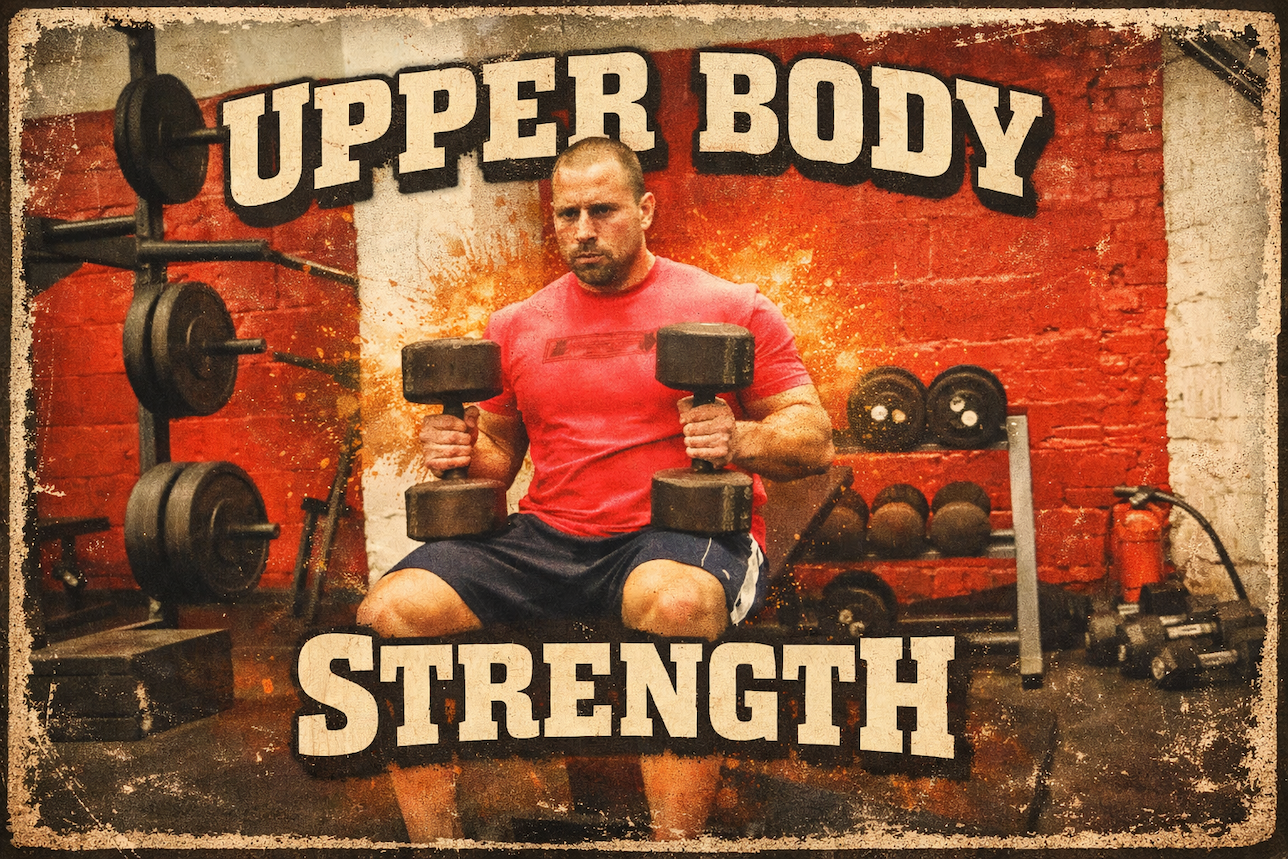
When the assistance lifts came along and the guys were doing triceps, he was using 70 lb dumbbells and the other guys were using 100 and 110 lb dumbbells.
AJ told me a Light bulb went off as he realized he had to remove the boundaries on his assistance work and Push those assistance lifts UP!
3) Remove the Mental Boundaries -
The best way to do this is to train with people stronger than YOU.
This goes for sports as well. The best teams have great training partners. They lift one another up and keep you moving forward.
The worst teams might have a few motivated individuals but most are happy with average and often cut corners and avoid doing extra work.
The way to get better is to be in a room where people force you to get better or you get kicked out.
4) Training the MIND -
I prefer to train my assistance lifts as shown in the video below, where I explain the how and why behind this method:
Train the mind; do the exercises that force you to level up physically and mentally.
Most will do what they like or what is easy for them. The way to grow in strength is to choose the challenging work.
I remember Mark Smelly Bell talking about training with one of Westside Barbell's most intense, strongest SOB's, Chuck Vogelpohl. Check out how Chuck pushed the limits to push the boundaries and limits that OTHER PEOPLE set.
5) Stay the Course: Consistency + Commitment
- Keep technique in check, don't use sloppy form. EVER.
- Train HARD but NOT to the point where you destroy yourself. Whether it is sports or training for life, always leave a little in the tank.
Live The Code 365,
--Z--
Get 2 FREE Videos from The Underground Strength Coach Cert HERE