Skip to content

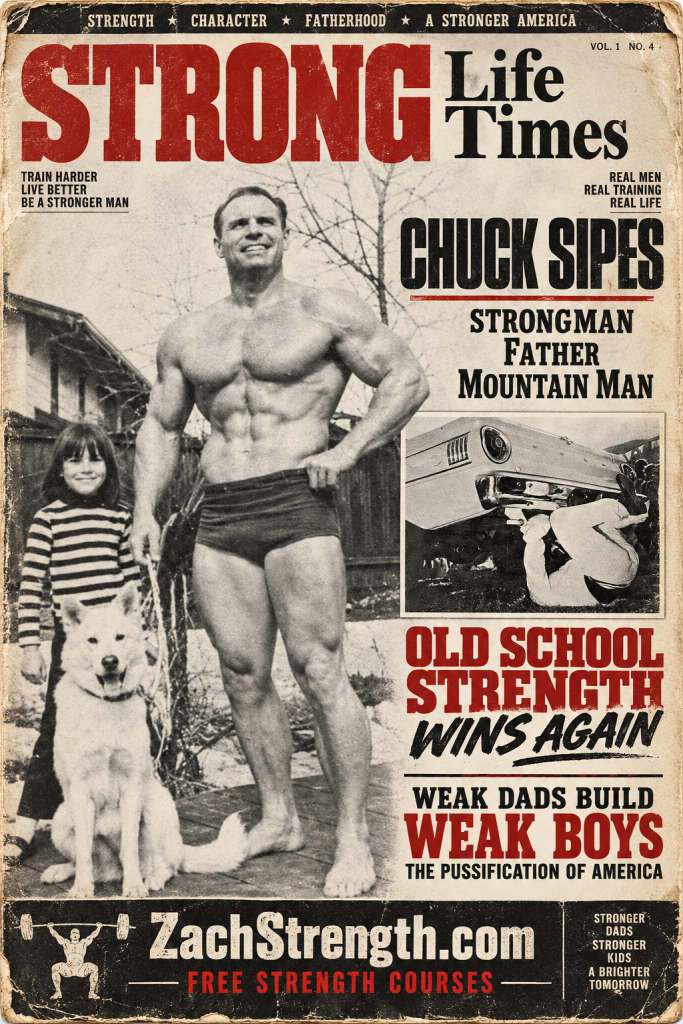
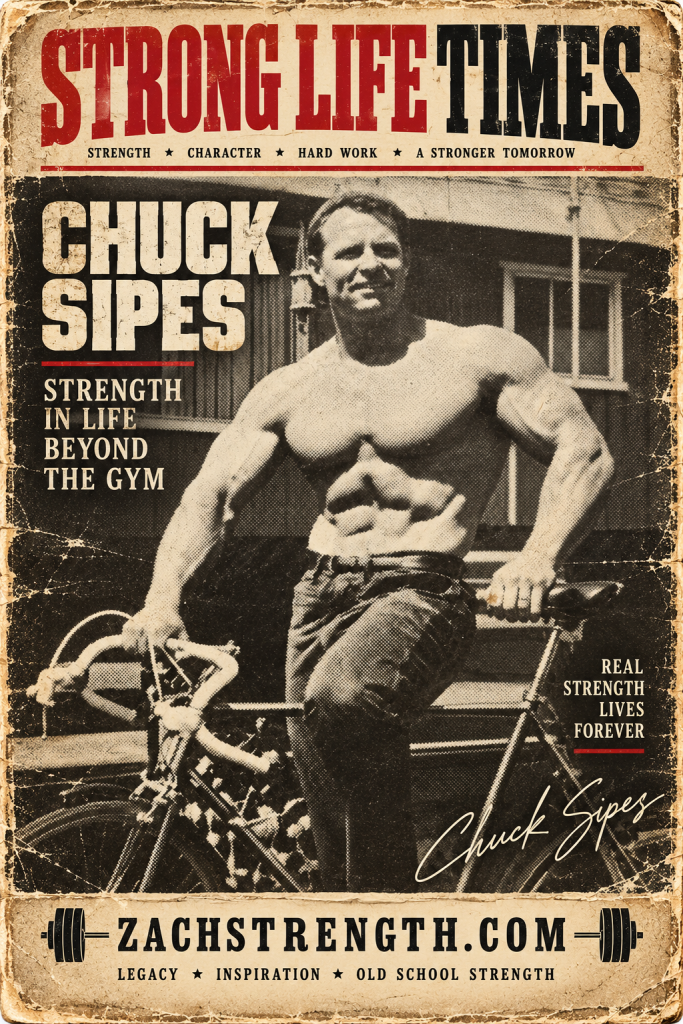
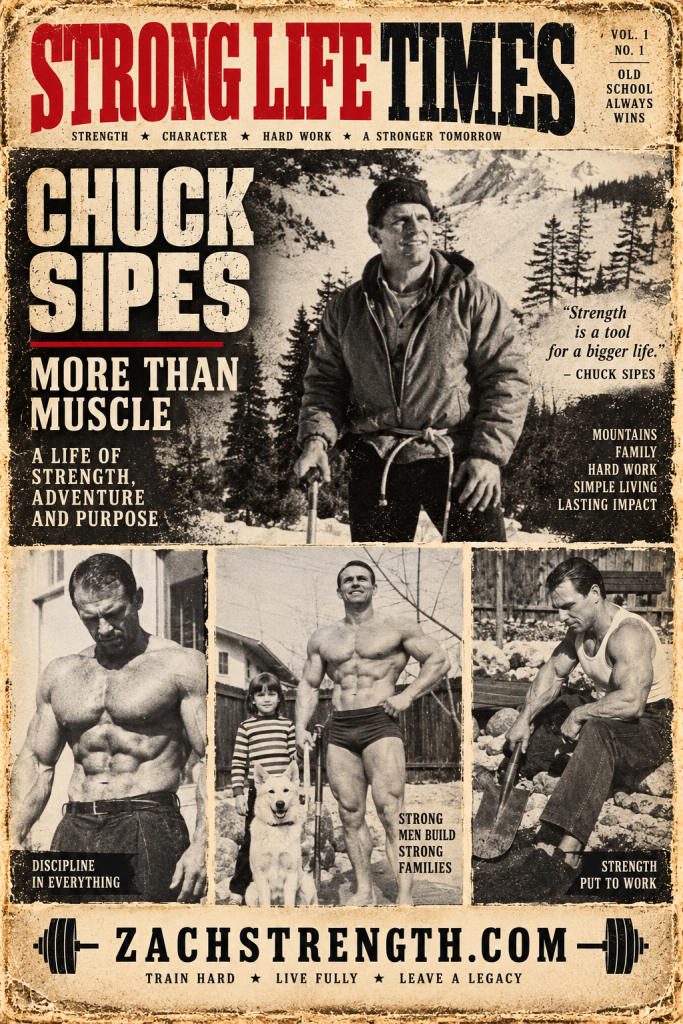
Most guys today have never heard the name Chuck Sipes.
That's a damn shame. Because Chuck Sipes might be the most underrated legend in the history of strength.
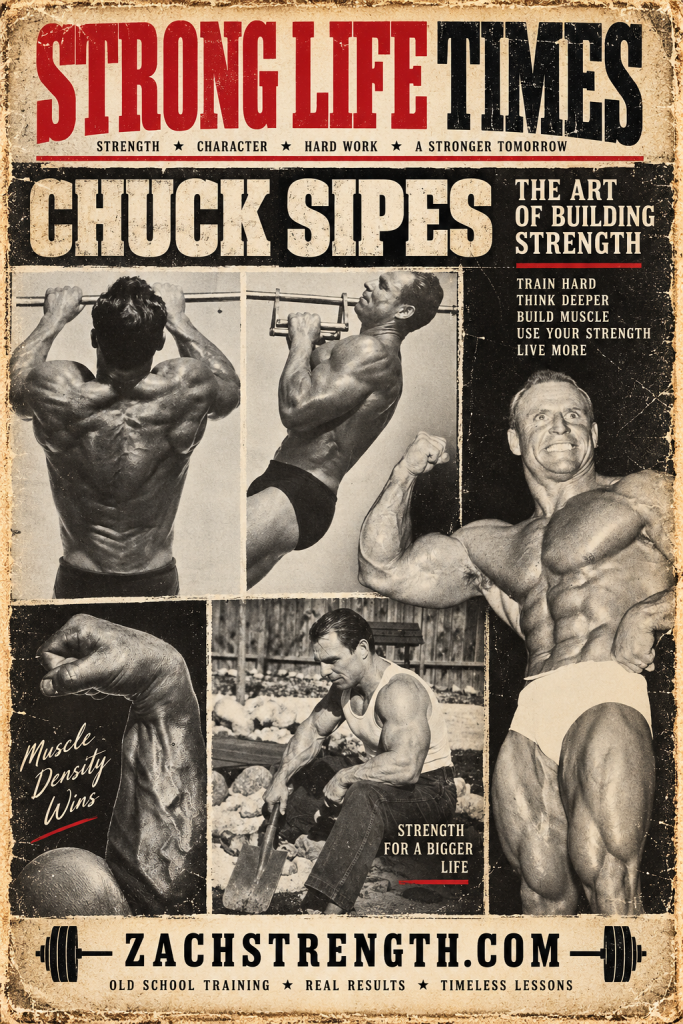
He was a Mr. America. A Mr. Universe. A Mr. World. Twice. He carried one of the best physiques of the Silver and Golden Era. And underneath all that muscle was a man who could bench 570 lbs at a bodyweight of 225, bend steel bars with his bare hands, and drive nails through 2 inch thick wood blocks using nothing but his palm.
But here's the part that made me fall in love with his story. Chuck Sipes wasn't just strong. He was a paratrooper. A mountain man. A mentor to troubled kids who needed someone to believe in them. And later in life, he traded barbells for paintbrushes and became a painter of the American West.
The ending is heartbreaking to me but in honor of Chuck and the old school greats, I am dedicated to sharing their stories and their history in a effort to respect them and help their legend live on.
Chuck didn't start out as a beast. As a teenager he was skinny, and he got cut from his high school football team. Most kids would've taken that rejection and let it define them. Chuck used it as fuel.
He started lifting weights under the guidance of his neighbor and coach, Chuck Coker, and that rejection became the spark that built one of the strongest, most well built men of his generation.
That's a lesson right there. Getting cut, getting told no, getting overlooked. That's not the end of your story. For Chuck, it was the beginning. I wish more athletes could feel that same fire. And, I wish there were more mentors out there like Chuck Coker - we try to do the same at The Underground Strength Gym.
Chuck's hunger for hard work and adventure led him into the Army, where he became a paratrooper with the legendary 82nd Airborne.
His time in the service wasn't easy. During a training accident he suffered a serious head injury and spent four months bedridden at Walter Reed Army Hospital. A lot of men don't come back from something like that the same. Chuck did. He got back to training, back to competing, and eventually built himself into one of the strongest men alive.
Chuck was benching 570 lbs at roughly 225 lbs of bodyweight. No bench shirts back in those days, No supportive gear.
Some accounts have his top end even higher over the years but only those lucky enough to be around Chuck will know.....
Many old timers considered him the second best raw bencher of his entire era, behind only Pat Casey. And he wasn't just chasing a number. He was carrying a full bodybuilding physique while he did it. Most men have to choose between looking strong and being strong. Chuck did both.
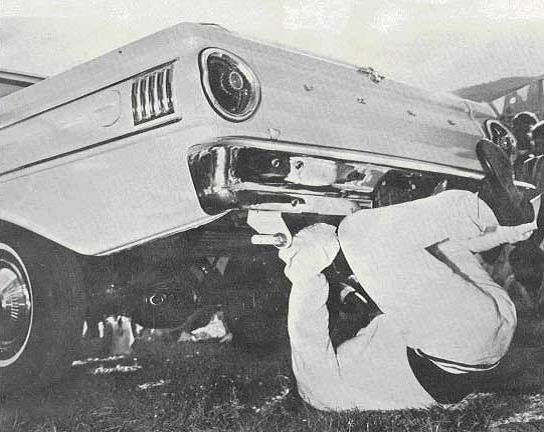
Chuck could also be seen bench pressing a car, because normal feats of strength weren't enough for a man like this.
Bodybuilders train for the stage / social media in today's modern day era - back then, many bodybuilders blended powerlifting, weightlifting and bodybuilding together.
Chuck trained for real world strength, and he loved proving it. He'd blow up hot water bottles until they burst using nothing but his lungs. He'd bend iron bars with his hands. He'd snap chains. Feats most men couldn't dream of doing even once, Chuck did as a regular part of his exhibitions.
In the mid 1960s he started the American Bodybuilding Club, charging just a dollar to join, and he gave lectures and exhibitions on fitness at schools, churches, colleges, and service academies. He wasn't hoarding what he knew. He wanted to spread it.
This is the part of Chuck's story that hits me the hardest, especially as a teacher / Coach and mentor to many youth / teen athletes.
Chuck spent over twenty years working for the California Youth Authority and the California School System, helping troubled youths find direction. He was an avid outdoorsman with a deep love for the mountains, and he'd take these teenagers on trips lasting 26 days, teaching them friendship, teamwork and self reliance.
During these trips, Chuck would send each kid out alone. Four nights. Three days. No support. They had to forage for their own food and survive on their own. That was the real test. Not a workout. Not a competition. Survival, and the confidence that comes from proving to yourself that you can handle hard things alone.
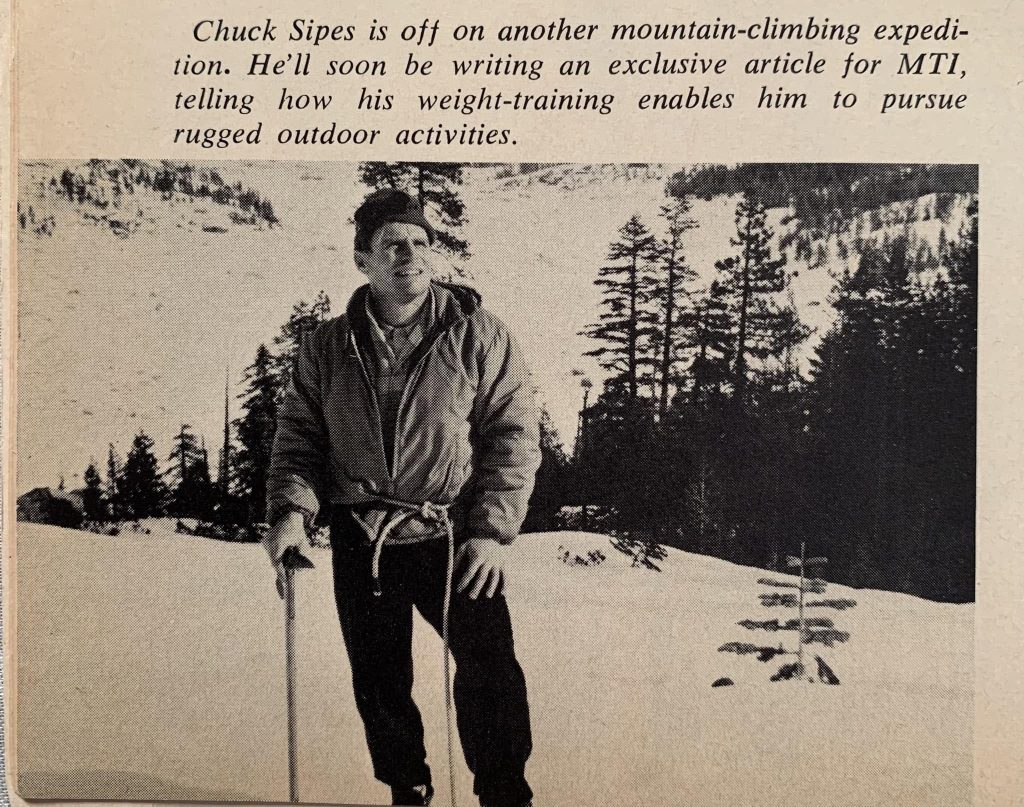
Chuck would often come back from these trips 20 lbs lighter and shredded, right alongside the kids he was leading.
Later in his life he continued this work with the physically and mentally handicapped as well. This man used his strength to serve people his whole life, not just to win trophies.
At his peak, Chuck's training schedule was borderline insane. High volume. Heavy. Intense. Training each muscle group three times a week, and often training three times a day.
Seeing this routine inspires me and hopefully you to push your limits and stop being scared of hard work.
6 AM – Home gym workout
2 PM – Second training session at the Youth Detention Center, training the kids alongside him
8 PM – Third training session, squeezed in near the end of his work shift, which ran 2 PM to 10 PM
Think about that. The man had a full time job helping troubled kids and still found a way to train three times in a single day. There's no excuse good enough after reading that schedule.
Chuck's Bench Press Program
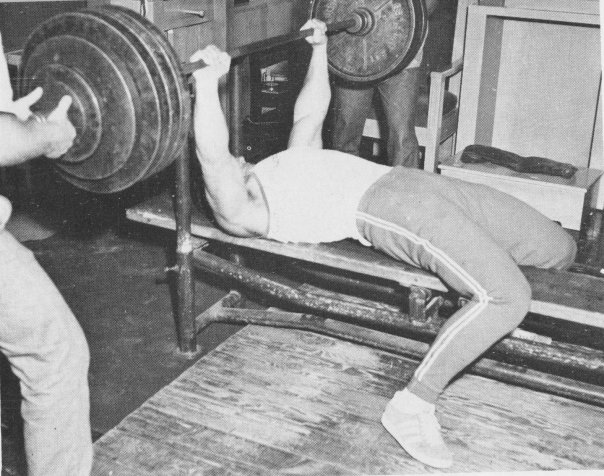
Chuck left behind his exact approach for building a bigger bench, and it's still worth running today if you want real, old school strength.
He recommended starting this program at least six months out from a meet. It's five days a week, and it's intense. There's a heavy emphasis on direct work for the ligaments and tendons, not just the muscle.
Monday and Wednesday
Bench Press – 2 x 6, 2 x 4, 2 x 2, then 4 singles
Tuesday and Thursday
Heavy Supports – 5 x 8 (100 lbs over your best press, moving from a quarter of the way down to lockout)
Prones – Close to max poundage
Heavy Supports – 150 lbs over your best press, holding with a slight bend in the elbow
Prones – Close to max poundage again
Friday
Incline Press, wide grip, done slowly – 4 x 6
Dumbbell Incline Press, done slowly – 4 x 6
Finish with Pullovers and Flys
This isn't a program built for comfort. It's built for men who want to get strong and are willing to put in the work the old school way.
From Iron to Canvas
After Chuck retired to Northern California, Chuck's love for the outdoors took a different form. He picked up a paintbrush and started painting Western landscapes, capturing mountain men and the wild country he loved so much.
Same soul. Same love of adventure. Just a different medium.
Chuck Sipes passed away in 1993, but men like this don't really leave us if we continue to honor them and share their stories.
Chuck's story doesn't have an easy ending, and I'm not going to pretend it does. It breaks my heart to share it....
The same head injury he suffered as a young paratrooper stayed with him for the rest of his life, causing recurring seizures as he got older. Those seizures and other physical ailments slowly took away his ability to do the things he loved most, the mountains, the outdoors, the physical life he built his entire identity around. That loss led to a deep depression in his final years, and on February 24, 1993, at 61 years old, Chuck took his own life.
It's a heavy note to end on, but it's part of the man and his story here on earth. Even the strongest, most giving people carry pain that isn't visible from the outside. Chuck spent decades pouring into troubled kids, teaching them to survive alone in the mountains and come back stronger for it. It's worth remembering that the man teaching that lesson was fighting his own battle the entire time.
Chuck's strength, his service, and his story are still here to remind us what's possible when you commit to hard work, mentorship, and living life all out.
There has never been an athlete or an adult who was grateful that they were weaker. If you have a gift to share, then do it. It's good for you, good for the people and good for the world.
Live the Code 365,
Zach Even - Esh